TEL: +86 15587495056

Pump Selection and Application in the Pulp & Paper Industry

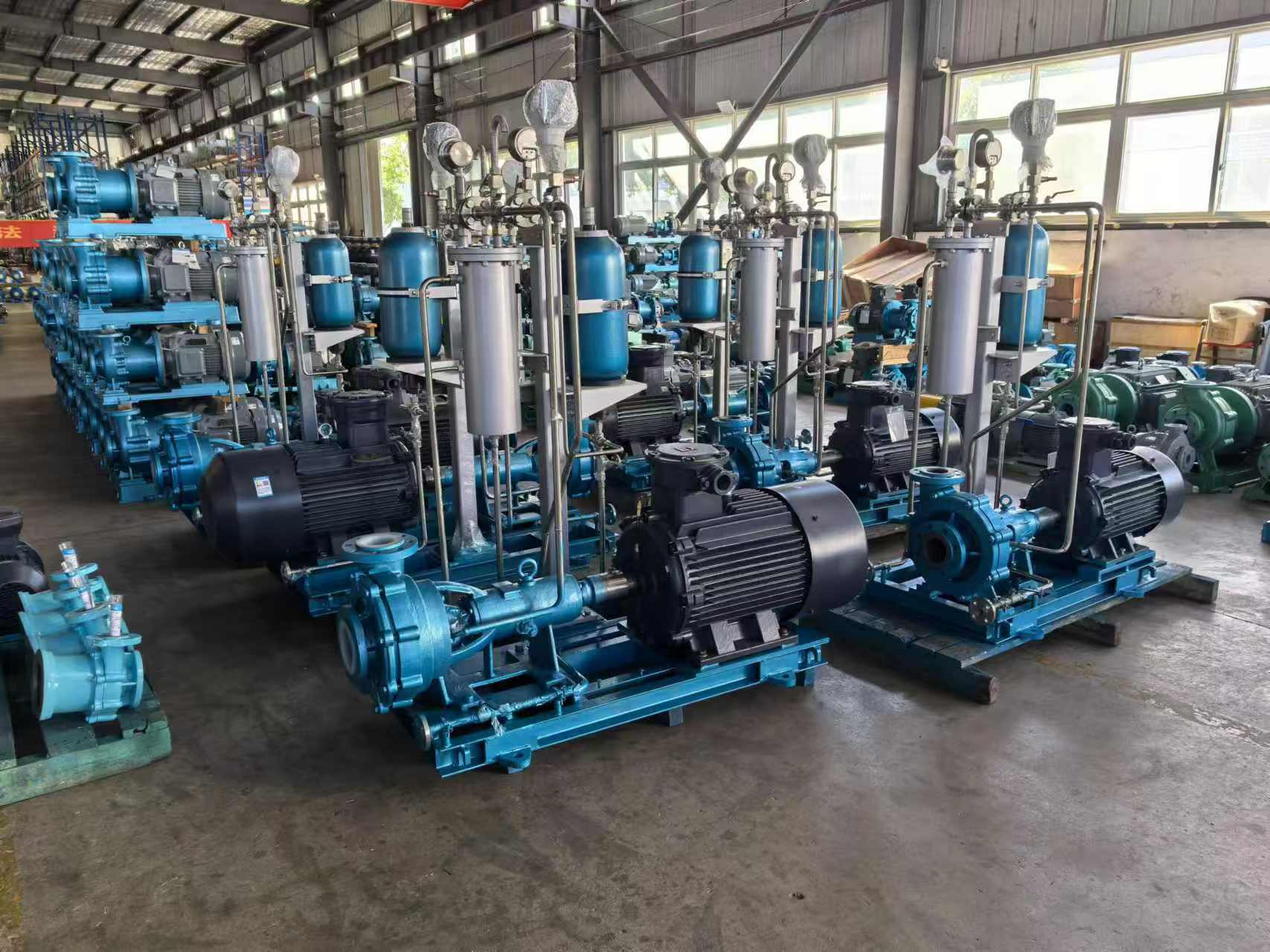
In the pulp and paper manufacturing process, pumps serve as the core fluid handling equipment across every production stage, from raw material preparation to finished paper forming and wastewater treatment. A properly selected pump not only ensures stable, pulse-free flow for continuous production, but also effectively reduces clogging, abrasion and corrosion risks, extending the service life of the entire fluid conveying system.
Main Pump Types for Pulp and Paper Applications
Centrifugal pumps are the most widely used workhorses in pulp and paper mills, covering most scenarios including stock transfer, white water circulation, filtrate handling and chemical delivery.
End-suction centrifugal pumps are ideal for clean to slightly contaminated fluids such as cooling water, white water and low-concentration filtrate.
Semi-open impeller centrifugal pumps can handle stock with consistency ranging from 1% to 6%, making them suitable for low-to-medium consistency pulp transfer with small suspended solids.
Recessed impeller vortex pumps are designed for fibrous rejects and fluids containing large, stringy materials that would easily clog standard closed impellers.
Vertical screw pumps stand out for their gentle handling performance, which minimizes fiber damage during conveying. They perform reliably in stock preparation, broke pulp recovery, wet end circulation and wastewater sludge treatment, with strong tolerance for entrained air and suspended fibers to reduce frequent clogging risks. Self-priming centrifugal pumps are specially configured for media with high gas content and viscous slurries, commonly used in hydraulic chip conveying and bark water handling, where hard iron or chrome alloy wetted parts provide excellent abrasion resistance against grit and bark fines.
Core Selection Principles for Optimal Performance
The first step of pump selection is to clarify the full characteristics of the conveyed medium, including pulp consistency, fiber length, particle hardness, temperature, pH value and entrained air content. For medium consistency pulp up to 16% bone dry, dedicated medium-consistency pumps can deliver high efficiency up to 74% without relying on additional external vacuum pumps.
Key performance parameters including flow rate and head should reserve a 10% to 20% safety margin on the basis of actual process requirements, to offset pipeline friction loss and extra lift consumption in high-altitude or long-distance conveying scenarios. For long-term continuous operation over 8000 hours per year, the total lifecycle cost covering procurement, maintenance and spare parts replacement should be considered, rather than only focusing on the initial purchase price.
Material and Structure Matching for Long Service Life
Wetted part material selection must match the specific medium properties. For ordinary non-corrosive pulp with small amount of hard particles, stainless steel ZG1Cr18Ni9Ti provides balanced abrasion and corrosion resistance. For strong corrosive chemical additives in bleaching stages, PVDF or RPP engineered plastics are preferred for their stable performance under corresponding temperature limits.
Seal configuration also needs to adapt to different working conditions: packing seal is suitable for media containing a small amount of particles, single mechanical seal fits clean low-value process water, while double mechanical seal is recommended for corrosive or high-value chemical media to avoid leakage loss. Horizontal paper pulp pumps with heavy-duty bearing housings can withstand large radial and axial loads, making disassembly, inspection and maintenance much more convenient without requiring integral hoisting of the whole pump unit.
By matching pump type, material and structure precisely with specific process stages, pulp and paper mills can achieve stable, energy-efficient operation, reduce unplanned shutdowns caused by pump failure, and guarantee continuous production performance throughout the whole manufacturing line.